Introduction to Artificial Intelligence (AI) what digitrise think about it !
In today’s fast-paced world, Artificial Intelligence (AI) is rapidly becoming a part of our daily lives. From smart recommendations on our phones to complex problem-solving tools, technology is evolving faster than ever.
What is Artificial Intelligence?
Artificial Intelligence (AI) is an area of computer science that develops smart machines capable of learning, solving problems, making decisions, understanding language, and recognising patterns like humans.
Rather than following rigid, pre-programmed rules, modern AI utilizes Machine Learning (ML) algorithms and Deep Neural Networks to analyze vast amounts of data, adapt from experience, and make autonomous decisions or predictions.
- 🤖 Mimics Human Intelligence
- ⚡ Processes Data Quickly
- 🔍 Recognises Patterns
- 💡 Supports Smart Decisions
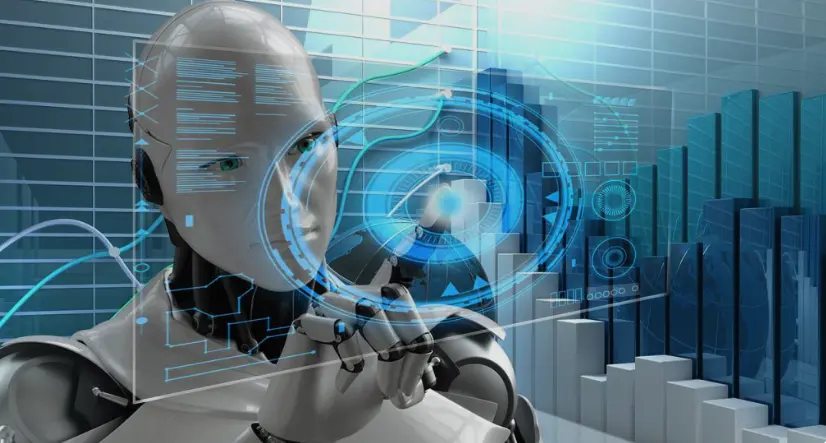
Where Did This Idea Come From?
Modern Artificial Intelligence began in the early 1950s when British mathematician Alan Turing asked an important question: “Can machines think?” In his 1950 paper, Computing Machinery and Intelligence, he explained that if a machine could communicate so naturally that people could not tell whether it was a human or a computer, it could be considered intelligent. His ideas inspired future researchers and became the foundation of today’s AI technology.
What Purpose Does Artificial Intelligence Serve?
The main purpose of Artificial Intelligence is not to replace human intelligence but to support it. AI is designed to make everyday tasks easier, faster, and more accurate. Instead of spending hours on repetitive work, people can use AI to save time and focus on creative thinking, problem-solving, and making better decisions.
Artificial Intelligence can quickly process large amounts of information that would normally take humans much longer to analyse. It identifies patterns, organises data, and provides useful suggestions based on the information available. This helps individuals and businesses make informed decisions without manually reviewing thousands of records or documents.
Another important purpose of AI is automation. Many routine tasks, such as sorting emails, scheduling appointments, translating languages, generating reports, or answering customer questions, can be completed with the help of AI. This improves productivity and allows people to spend more time on work that requires human creativity, communication, and critical thinking.
AI also helps improve services in many areas of life. In healthcare, it can assist doctors by analysing medical information. In education, it can create personalised learning experiences for students. Businesses use AI to understand customer needs, while farmers, engineers, and researchers use it to solve complex problems more efficiently. Although AI is a powerful technology, it still depends on human guidance, quality data, and responsible use.
As AI continues to develop, its purpose remains the same—to help people work smarter, reduce unnecessary effort, improve efficiency, and create better opportunities across different industries. When used wisely, Artificial Intelligence becomes a valuable tool that supports human potential rather than replacing it.
Artificial Intelligence History: Important Events That Shaped AI
The Question That Started It All
Alan Turing’s question, “Can Machines think Like Humans?”, inspired many scientists to explore the future of intelligent machines. His idea encouraged researchers to study whether computers could understand, learn, and solve problems in a way similar to humans. This simple question became the starting point for many important discoveries in the field of Artificial Intelligence, for ex –
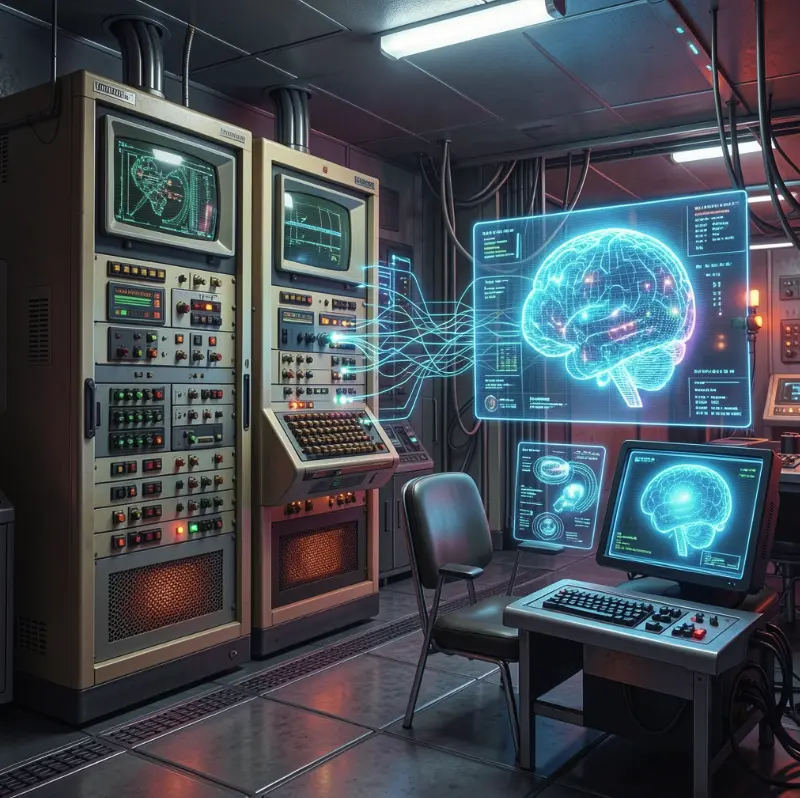
- Because of his Curiosity
- His Vision was only about AI.
- Innovation for the Human World
- Thinking Like Never Before
The Origin of Artificial Intelligence: From Turing to Today
- To test this idea, researchers introduced the Turing Test. The purpose of this test was to find out whether a computer could communicate so naturally that a person could not easily tell if they were talking to a machine or another human.
- If a machine could successfully do this, it would demonstrate intelligent behaviour.
- A few years later, in 1956, a group of researchers gathered at Dartmouth University to discuss the future of intelligent machines.
- During this meeting, the term Artificial Intelligence was introduced, giving this new field of study its official name. Around the same time, researchers also developed one of the earliest AI programs called Logic Theorist.
- It was designed to solve mathematical and logical problems, showing that computers could perform tasks that previously required human thinking.
Milestones That Changed the Future of AI
Artificial Intelligence continued to improve over the following decades. One of the biggest milestones came in 1997, when IBM’s Deep Blue defeated world chess champion Garry Kasparov in a famous chess match.
This historic achievement proved that AI could analyse complex situations, make intelligent decisions, and compete with some of the world’s best human minds in specific tasks.
These important events laid the foundation for modern Artificial Intelligence.
Today, AI is used in healthcare, education, business, transportation, entertainment, and many other industries, continuing the journey that began with one simple question many years ago.
Modern Artificial Intelligence Milestones That Changed the World
Artificial Intelligence has grown rapidly over the last decade and has become a part of everyday life. From voice assistants and search engines to online shopping and navigation apps, AI helps make daily tasks faster, easier, and more accurate. Although the idea of AI began many years ago, recent advances in computing power, internet access, and large amounts of digital data have helped AI develop at an incredible speed.
The Rise of AI Assistants
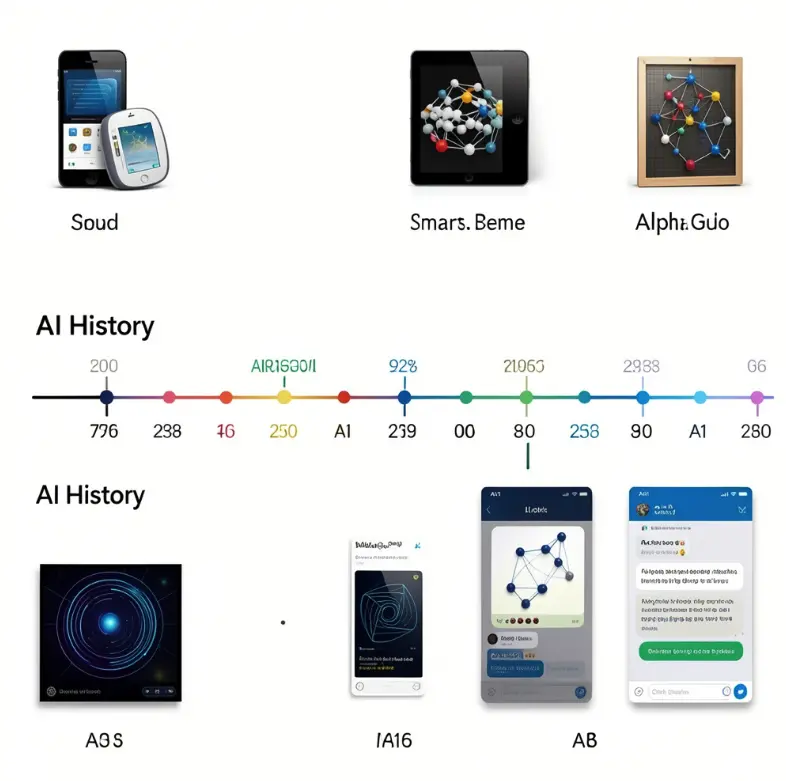
One of the biggest milestones in modern AI came in 2011 when Apple introduced Siri, one of the first widely used virtual assistants. Siri allowed users to interact with their devices using voice commands, making technology more natural and user-friendly.
This innovation showed how AI could understand human language and assist people with everyday tasks such as setting reminders, answering questions, and making phone calls.
AI Achieves Historic Success
Artificial Intelligence continued to make remarkable progress over the following years. In 2016, Google’s AlphaGo surprised the world by defeating one of the best professional Go players, a game known for its complexity and strategic thinking.
Later, in 2022, Sam Altman and his team introduced ChatGPT, a generative AI chatbot that gained more than 100 million users within just two months. Its ability to answer questions, generate content, and assist with different tasks made AI more accessible than ever before.
AI in Today’s World
By 2024, Artificial Intelligence had become a valuable tool across many industries. It is now helping doctors diagnose diseases, teachers create learning materials, businesses improve customer service, lawyers organise legal documents, and financial institutions detect fraud. AI also powers recommendation systems, translation tools, and smart assistants used every day.
- Healthcare
- Education
- Automation
- Future Growth
Why Is Artificial Intelligence Becoming Important Today?

Artificial Intelligence has become an important part of modern life because it helps people complete tasks faster, improve accuracy, and save valuable time. It can analyse large amounts of data within seconds, helping individuals and businesses make better decisions. AI also automates repetitive work, allowing people to focus on creative thinking and solving complex problems.
Today, AI is used in many industries, including healthcare, education, finance, transportation, agriculture, and customer service. It helps doctors detect diseases, supports teachers with personalised learning, improves business operations, and enhances the overall user experience. As technology continues to evolve, Artificial Intelligence is becoming a powerful tool that drives innovation, increases productivity, and creates smarter solutions for everyday challenges.
Risks and Challenges of Artificial Intelligence ?
Artificial intelligence is reshaping how we work, communicate, and make decisions, but its rapid rise brings real risks that deserve careful attention.
- Bias and discrimination — AI systems learn from historical data, so when that data carries social biases, the resulting decisions in hiring, lending, or policing can end up reinforcing the very inequalities they were meant to reduce.
- Job displacement — Automation is moving beyond routine manual work into cognitive and creative tasks, putting pressure on entire professions and raising urgent questions about retraining and economic security.
- Privacy erosion — Many AI tools rely on enormous datasets, often gathered with limited transparency, which raises concerns about surveillance and how personal information is stored, shared, or exploited.
- The “black box” problem — Complex models, especially deep neural networks, can be nearly impossible to fully explain, making it hard to hold anyone accountable when a system causes harm or makes an unfair call.
- Misuse and security threats — From deepfakes and disinformation to AI-assisted cyberattacks, the same capabilities that power useful tools can just as easily be turned toward manipulation and harm.
Long-term alignment — As systems grow more capable, ensuring they stay aligned with human values and remain under meaningful human oversight becomes a harder, higher-stakes problem.
None of this means progress should stop — but it does mean developers, policymakers, and the public need to work together so innovation doesn’t outpace safety, fairness, and accountability.
Conclusion: Final Thoughts on Artificial Intelligence
Artificial Intelligence has undergone a remarkable evolution — from a mere theoretical concept in the 1950s to an inseparable part of our everyday existence. From catalyzing business growth and revolutionizing healthcare to generating content and resolving intricate problems, AI is fundamentally reshaping the way humanity lives, works, and thinks.
Yet alongside its promise, AI presents formidable challenges: the displacement of jobs, the erosion of privacy, and unresolved questions of accountability when these systems falter. As this technology continues its rapid advance, it becomes imperative that we wield it judiciously and establish robust regulatory frameworks to ensure it serves the collective good.
Ultimately, Artificial Intelligence is neither inherently virtuous nor inherently harmful — it is an immensely powerful instrument, and its true impact hinges on how conscientiously we choose to develop and deploy it. When guided with responsibility and foresight, AI holds the potential to enhance human wellbeing, tackle pressing global challenges, and pave the way toward a more promising future for generations to come.
Numerous ethical questions, however, remain unresolved. Should AI be deployed in warfare or entrusted with judicial decisions? How do we ensure fairness across nations with vastly different resources and priorities? Should artificial intelligence itself be granted rights, and who rightfully owns the content it generates? These questions have no easy answers, yet they will shape how AI’s legacy ultimately unfolds.
In my own view, AI is poised to become the most consequential pillar of power humanity has ever built — and I do not see it as an existential threat. Rather, I see history repeating a familiar pattern: much like the advent of the internet, and before that, the invention of the computer, humanity once again stands at the threshold of a transformative technology, tasked with the responsibility of shaping it wisely.